Tag Archives: homeopathy plus

A win for science, scepticism and common sense in the House of Commons

What has become of UK politics?

A few weeks back on the Think Tank we heard the story of David Tredinnick, the UK Conservative MP who spent 700 quid of taxpayers money on astrology software. It turns out he believes in all kinds of woo, including  such tosh as, depending on the phase of the moon, “surgeons will not operate because blood clotting is not effective and the police have to put more people on the street”. He is also a big fan of homeopathy, and in response to the recent Committee on Science and Technology evidence checks findings about homeopathy, he submitted four early day motions (EDMs) to the House of Commons for consideration.

For those non UK readers, EDMs are motions tabled by Members of Parliament for debate “on an early day” (namely an unspecific date in the future). EDMs cover all manner of subjects that the MP thinks parliament should be made aware of and possibly debate. They can address serious matters such as climate change, or trivial events such as the Pidgeon Bombs EDM which was tabled in the 2003–04 session of the UK Parliament. This EDM concerned itself with a disclosure by MI5 that it had proposed using pigeons as flying bombs World War II. According to Wikipedia, the motion condemned the proposal, describing humans as “obscene, perverted, cruel, uncivilised and lethal”, and proposed that the House “looks forward to the day when the inevitable asteroid slams into the Earth and wipes them out thus giving nature the opportunity to start again”. (I realise this is Wikipedia but I sincerely hope this is true).

EDMs remain open for signature for the duration of the parliamentary session but are rarely ever signed by all 400 MPs and few make it to the floor for debate.

Despite the recent evidence check and the damning findings that the National Health Service should cease funding homeopathy, no further clinical trials of homeopathy should be conducted, evidence shows homeopathy doesn’t work, explanations for why homeopathy works are “scientifically implausible”, David Tedinnick was just busting to share some “new information” about homeopathy! So he tabled four EDMs, one citing “new research” concerning homeopathy as a effective treatment for breast cancer (which came out prior to the evidence check BTW) (EDM285), for depression (EDM286) and also insomnia (EDM287). Tredinnick also objected to the British medical association’s recent public statements that homeopathy is witch craft and calling for no further commissioning of, nor funding for, homeopathic remedies in the NHS (EDM284).

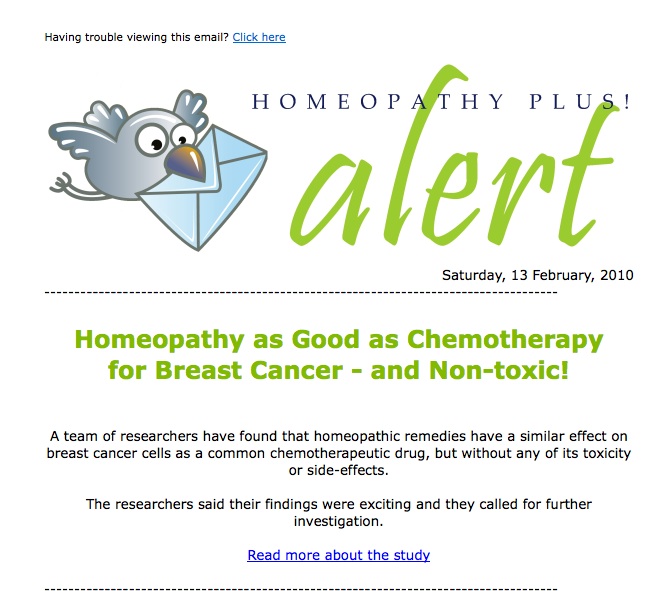
He cited published peer reviewed studies as evidence for his claims. One of them I happen to know very well, since I spent the better part of a Saturday back in February debunking the entire paper. The reason I did this was because Richard Saunders had received an e-alert from Homeopathy Plus! With a headline screaming “Homeopathy as good as chemotherapy for breast cancer and non-toxic!”. Which is a pretty extraordinary claim for some magic water. And also likely to be complete bollocks (I won’t keep you in suspense – it is).

EDM285 is reproduced below.

That this House welcomes the study published in the International Journal of Oncology, 2010 Feb; 36(2): 395-403 which revealed that homeopathic remedies have a beneficial effect on breast cancer cells; notes that researchers at the University of Texas conducted an in vitro study to determine whether products prescribed by a clinic in India have any effect on breast cancer cell lines; further notes that the researchers studied four ultra-diluted remedies, carcinosin, phytolacca, conium and thuja against two human breast adenocarcinoma cell lines, MCF-7 and MDA-MB-231 and a cell line derived from immortalized normal human mammary epithelial cells, HMLE; observes that the remedies exerted preferential cytotoxic effects against the two breast cancer cell lines, causing cell cycle delay/arrest and apoptosis; believes that the findings demonstrate biological activity of these natural products when presented at ultra-diluted doses; and calls for further research in this important area.

Yeah, I guess Tredinnick, like Homeopathy Plus either didn’t read the entire paper or doesn’t understand how to interpret the scientific literature cause this aint what I gleaned from the paper.

So the Twitterverse was mobilised to gather rebuttals to these 3 papers. Once Dr Evan Harris had my blog and Orac’s from Science Blogs in his sticky fingers, Dr Julian Huppert got straight onto composing a rebuttal. And it is a joy to read.

So let’s see what became of EDM 285 once it Harris and Huppert had gone to town on it.

EDM285A1
now reads like this:

Line 2, leave out from `403′ to end and insert `as an example of the failure of adequate scientific peer review because the paper provides no statistical analysis to support any conclusion, indicates that the experimental control, 87 per cent. alcohol solution, was itself toxic to the cell cultures, does not illustrate or explain the different chromatographic profiles of the solvent and the test substances, and does not provide sufficient data to allow proper evaluation of the study; notes that the lead author has retired and runs a homeopathy website which falsely claims that homeopathy is as effective as a conventional chemotherapy agent, Taxol, in treating breast cancer; further notes that one of the authors, Alison Pawlus, has publicly disowned the paper; regrets that isolated poor-quality studies are cited by proponents of homeopathy to endorse dangerous and exploitative cancer-curing claims in the face of overwhelming weight of scientific evidence against them; and agrees with the conclusions of the Science and Technology Select Committee’s Fourth Report of Session 2009-10, Evidence Check 2: Homeopathy HC45 that putting patients through pointless further clinical trials, and the spending of scarce public sector funds on research into homeopathy cannot be justified.’.

The comment about Alison Pawlus, listed as an author on the study publicly disowning the paper is derived from a comment she left on my blog where she stated;

“As an unintentioned co-author on this study, I feel obligated to respond….”

Alison went onto say “…I asked to not be included because I did not think it was a sound study…”

And

“I believe this study demonstrated changes in alcohol percentages on cells rather than the efficacy of homeopathic medicine.”

The amendments to the EDMs constitute a marvellous result and are testament to the dedication of Dr Evan Harris and Dr Julian Huppert. The fact that this message got out so quickly is also a credit to the power of the blogosphere and twitterverse. In fact, this was how I originally got my hands on the full text of this article, by tweeting for someone to source it for me. Thanks @xtaldave!

But David Tedinnick is not the only one who has jumped to conclusions about the findings of this paper. I already mentioned Homeopathy Plus! making a giant leap in logic from “cells treated in culture” to “homeopathy is better than chemo for cancer.” Many others have picked up this meme and run with it, despite the fact that not even the paper itself makes this claim.

The only reference to a common cancer drug appears buried in the discussion and states, “Interestingly, the cytotoxic effect of two of the remedies investigated in this study, Carcinosinand Phytolacca, appeared similar to the activity of 0.12 ?M paclitaxel (Taxol), the most commonly used chemotherapeutic drug for breast cancer, when it was tested in the two adenocarcinoma cell lines investigated in this study in parallel experiments (data not shown)”.

I repeat, DATA NOT SHOWN. Interesting that homeopathy sympathisers can go from this, to homeopathy can cure cancer. But then facts, evidence and science never really did interest them much. As for David Tredinnick, well it seems he is not much interetsed either, as revealed in a debate between him and Dr Simon Singh BBC Radio 4. You can listen to the audio here.

You can also read two great stories about the loonie beliefs of David Tredinnick from The Guardian by Nature’s @AdamRutherford here and The Lay Scientist’s @mjrobbins here.

The entire exercise was summed up by tweeter @paulNUK2010 who relected; “How to get your scientific papers peer reviewed by experts in the field – get David Tredinnick to cite them in an EDM #homeopathyEDMs”.

So very true.

As I said in my original blog post, the journal that published this tosh has an impact factor of 2.234 but a fail factor of 10^23.

Sadly, these amendments do not mean the loonie EDMs have been thrown out. We still need MPs to show their support by signing the amended versions.

If you live in the UK, please write to your MP here. You will find a form letter to use for a guide here.
A giant leap in logic from a piece of bad science

homeo fail

When this appeared in my inbox yesterday, courtesy of Richard Saunders (who was kind enough to ask me if I was sitting down first) I initially *facepalmed*, then sought about getting the original paper where this apparent break through research had appeared (thanks to @xtaldave for the full text).

The paper that had apparently found homeopathy to be as effective as chemo for breast cancer (according to Homeopathy Plus!, yes those guys), was published in the International Journal of Oncology* and entitled “Cytotoxic Effects of Ultra Diluted Remedies on Breast Cancer Cells.” (Full text has been removed because quackers were linking to it for nefarious purposes>Click the link for the full pdf of the study).

The paper examines the effects of ultra-dilute remedies (read:homeopathy) on the induction of cell death in two cancer cell lines (commercially available MCF-7 and MDA-MB-231) and one immortalised control cell line, (HMLE).

The authors use several remedies already in use for the treatment of human breast cancer developed at the P. Banerji Homeopathic Research Foundation in India, Kolkata;

Carcinosin, 30C; Conium maculatum, 3C; Phytolacca decandra, 200C and Thuja occidentalis, 30C (for an explanation of how dilute these remedies are see here).

All remedies were diluted in 87% “extra neutral alcohol” and succussed, including the alcohol used as the control solvent.

The authors analysed each remedy with high performance liquid chromatography (HPLC) to look for differences, then measured cell death in cell culture in response to increasing doses and increasing time of incubation with each remedy. These measures include the MTT assay for cell viability, Annexin V and PI for apoptosis, FISH for DNA breakage and Western blots to measure activation of cell cycle proteins.

Technically the paper is quite well written. The problems lie with the data. And these problems are so massive, I wonder how they got by the reviewers. I don’t know whether they were dozing when they reviewed this paper, but I could immediately see some big fat gaping holes in their results.

First up a few pointers;

“The experiments were conducted in triplicate and repeated at least twice in each case of remedy”

This would not get past me. It is accepted scientific convention that experiments are done at least three times (not two) and also in triplicate, giving you a final “n” number of 9. These studies were done in cell culture, meaning there is plenty of material for experiments to be repeated as many times as you wish. So why were they only done twice? Three is convention because it gives the study more statistical power.

Ah statistics, huh?

There is a distinct lack of statistics in this paper, by which I mean there are none at all. As my friend Jo said; “Nary a p-value nor a confidence interval to be seen”. Which begs the question, how can you get a paper accepted in a peer reviewed journal without doing an statistical analysis?

Really? No, I mean REALLY? This is why I suspect the reviewers were dozing or drunk.

And by not doing any statistical analysis, you can not make any statements about whether the treatments are different to each other. Statistics uses algorithms to calculate mathematical differences with a degree of confidence (usually 95%) so that we don’t rely on visual interpretation, which is notoriously unreliable. But this doesn’t seem to have bothered these authors, or the reviewers.

So let’s look more closely at the results.

Firstly the HPLC.

Oh wait a sec, there are no results shown for HPLC. And neither do the authors say “no results shown”. They just make some rather confused statements about what they think they saw and move on. What?! I need to see the chromatograms. What possible reason could they have for not including this data, especially when they go on to describe it so badly in the text.

“All four remedies had very similar HPLC chromatograms to each other, with only trace amounts of limited number of peaks. They were not significantly distinct from the solvent and they lacked the distinct peak seen in the solvent.

So, this means that all the remedies were the same, ie. no different to the solvent and no other peaks indicating any ingredients. But then they contradict themselves by saying that the remedies did not have the solvent peak? Fail.

And then;

“The chromatogram of the untreated and treated solvents appeared identical, indicating that succussion did not cause chemical changes in the solvent.”

Okay, but don’t some homeopaths claim that succussion does have an effect on the chemical structure of the water/solvent? Isn’t this how they explain that homeopathy works? I can only guess SINCE WE CANNOT SEE THE CHROMATOGRAMS, but what you are saying is the remedies and the solvent were exactly the same, meaning they are solvent.

No surprises there.

What about the cell death studies?

So let’s look at the cell death studies since these constitute the crux of the study’s aims. That is, to determine if these ultra dilute remedies can induce cell death in cancer cell lines.

So here we have results for all three cell lines, two cancerous and one control, and they are all treated with a control (the 87% alcohol solvent) or the remedies and death measured by MTT assay. Here’s how they describe it in the text;

“Interestingly, the inhibitory effects on cell viability of the remedies in both the MCF-7 and MDA-MB-231 cells were distinctly greater for each of the doses tested than those seen in cells treated only with solvent.”

Which translates as the treatments killed the cells better than the solvent alone. Okay, so it looks like it did when you eye ball the histograms, but you have no evidence for this – you didn’t do stats, therefore you cannot say this! Sheesh, where did you learn to write science?

But why not keep the fail going;

“MCF-7 cells were found to be more sensitive to all four remedies than the MDA-MB-231 cells”.

Again no statistics, so this statement cannot be confirmed. When you do science properly and you run statistical analysis, you are entitled to say, “MCF-7 cells were found to be significantly more sensitive to all four remedies than the MDA-MB-231 cells”.

Unless you’re these authors, then you just get a great big FAIL stamp on your work.

Also note that they state that the control treatment (that is the solvent) also induced cell death in all cell types;

“As shown in Fig. 1A, the solvent reduced the viability of all three cell types; the overall reduction in cells at different doses of solvent was about 30% for MCF-7, 20-30% for MDA-MB-231 and 20% for HMLE cells.”

Ummm, hold on a sec.

This is your control treatment, which means it should not be causing cell death. It is designed to be inert, functioning as a carrier of your treatment, in order that you can measure the impact of the treatment alone. If your solvent or vehicle is killing your cells you have a fundamental problem. You need to go back to the drawing board and find a different solvent to deliver your treatment.

This is a very big problem right here.

If the cell death induced by the solvent is significant, then the rest of the paper is worthless. But because there are no stats here, there is no way to tell if death by the solvent is significant. According to the above statement, the alcohol killed ~30% of the cancer cells compared to no treatment at all. Although this effect was increased when the treatment was present, there remains a large problem with your model if your solvent is killing the cells.

Perhaps this explains why there are no stats in this paper? Because they may in fact show that the “inert” solvent also significantly kills the cancer cells? Once again, there is no way for me to know this without access to the raw data, or the statistical analysis.

Man, how the hell did this embarrassment get accepted?

Well now that I have revealed a fundamental flaw in this tripe I have lost the will to continue. There is much more fail herein however, I mean we are only at Figure 1 remember.

So I will cover just a few more things that are also glaringly obviously wrong with this paper, then I will send a large bottle of 87% alcohol to the editorial board and encourage them to keep up the good work of smiting the peer review process and science in general.

General lack of quantitation of results in this paper.

figure 3

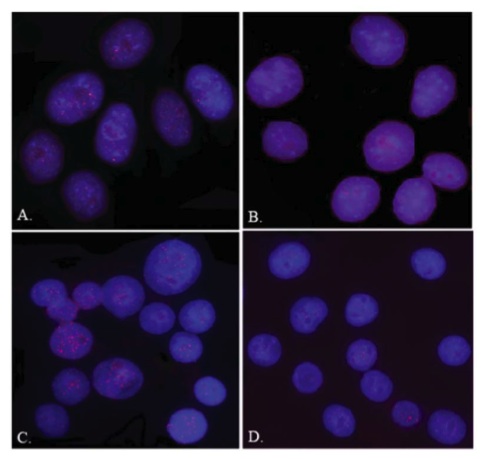
Figure 3, excerpt from Frenkel et al., showing damage to DNA.

Figure 3 (left) shows fluorescent microscopy data for DNA breakage as measured by FISH assay. But where is the quantitation of this data?

The authors show a representative image for each treatment, and this is usually acceptable if you then measure large numbers of cells and report on such changes with numbers (see below).

cytochrome c

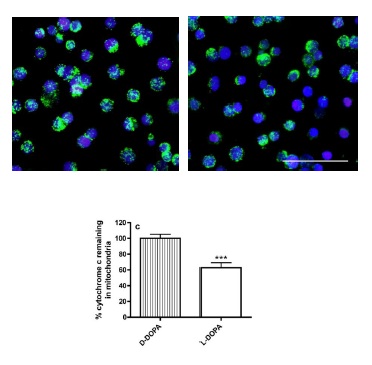
Dunlop et al., in press. Panels are representative DAPI/FITC overlay images of at least 10 images taken from triplicate wells. Histograms are mean + SD of 3 independent experients, incubations in triplicate, n = 9, p < 0.001 1-way ANOVA. Tukeys post-hoc analysis.

Further, even in the fluorescent images the authors only show a maximum of 14 cells. What the hell can you glean from 14 cells? They even say;

“At least 200 cells from treated and untreated samples were analyzed for mitotic index and telomeric DNA signals with a Nikon Eclipse 80i microscope equipped with fluorescence attachment and a Photometrics CoolSNAP HQ2 monochrome digital camera.”

So where is this data? Not in this paper, I can tell you that.

Next up Western blots.

Then they move onto Western blots. Actually this looks like the most resolved part of the paper. They have normalised everything to beta-actin as convention goes, and they have indicated the time of exposure to treatments. But as I mentioned earlier, if their control treatment 87% alcohol, is killing cells, then what can we glean from this data? Well not much except the effect could be an additive effect of the alcohol and treatment. There is no way to differentiate the impact of the treatment versus the control.

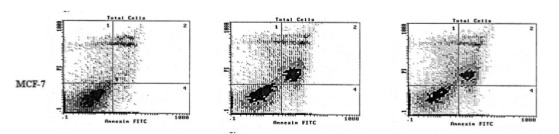
Flow cytometry, not quantitated either.

Sigh. I spend most of my days doing flow cytometry, so I am pretty familiar with how it works and what are the accepted ways to present the data. This is not one of them.

Figure 5, excerpt from et al.,

Figure 5, excerpt from Frenkel et al.,

The assay they use (Annexin V and PI) is a common one and I use it often. Standard procedure is to count ~10,000 cells for each condition, then plot your results on a graph, like this (see left below).

AO flow

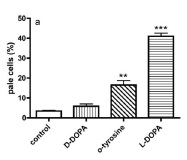
Dunlop et al., in press. Flow cytometry analysis of lysosomal destabilisation in THP1 human monocytes with acridine orange as a probe. Mean & SD of three independent experiments, incubations conducted in triplicate (n = 9), ** p < 0.01, *** p < 0.001, 1-way ANOVA, Tukeys post-hoc analysis.

You might also show your scatter plots as they have done above, as a nice visual demonstration of how the cells respond to the treatment, but this is not quantitation.

I’m going to stop there. I won’t even bother dealing with the discussion and conclusions, because by my analysis, they are based on flawed data.

One thing I will say about Homeopathy Plus! yelling “Homeopathy as good as chemotherapy for breast cancer” is not a conclusion you can draw from this study.

For all the reasons I have addressed above as well as the really obvious point that these studies were conducted in cell culture. This is a very different situation to a whole animal.

Cells bathing in a bath of homeopathy is very different to the processes which occur in vivo, for example the treatment must survive the low pH of the stomach, cross the gut, escape metabolism in the liver and get to the site of the cancer then do it’s job. This is a very complex process and very difficult to control. Studies in cell culture can provide data about the mechanism of action of a compound, but rarely do they relate to the processes in a human.

Never extrapolate results from a culture dish to a whole animal. You will undoubtedly be wrong and look like a fool.

Ooh, did someone say Homeopathy Plus!?

Listen to Fran Sheffield from Homeopathy Plus! talk about how homeopathy works here (mp3, 3:19).

*The International Journal of Oncology, impact factor 2.234, fail factor 10^23.